Cheap Windows keys are legitimate when they come from a genuine license sold by an identifiable reseller with a stated license type and a guarantee, and risky when they come from an anonymous seller with no invoice, no license type and a price that undercuts everyone else. The software behind a $10 key and a $199 key is identical; what differs is where the license came from and what happens if it stops working. Here is how to tell the two apart before you pay.
Why are cheap Windows 11 keys so cheap?
Microsoft’s list price for Windows 11 Pro covers a boxed or downloaded retail copy with Microsoft’s support and margins built in. Nobody in the reseller channel pays that. Licenses move through distributors in volume, independent resellers buy at wholesale, and because the product is a code delivered by email there is no shipping, packaging or shelf space. Competition between resellers then pushes the shelf price down to a fraction of Microsoft’s.
So a low price is not evidence of a problem by itself. It becomes a warning sign when it is paired with the other signals below, or when it is dramatically lower than every other reseller at the same time. Windows keys cheap enough to be almost free usually were almost free to the seller too.
Where do gray-market Windows keys come from?
Keys that fail later tend to come from a handful of sources. The code itself is real; the license behind it is not one the buyer is entitled to.
- Volume license leaks. A Multiple Activation Key from a company or school agreement has a fixed activation count. Sold one activation at a time, it works until the count runs out or the agreement ends, then every PC using it drops to not activated.
- KMS client keys. These activate only against a company’s own activation server. Sellers pair them with a script that points your PC at an unofficial server, which is not activation at all and can be a malware risk.
- Fraudulent purchases. Keys bought with stolen cards are revoked when the charge is reversed, often weeks later.
- Harvested OEM keys. Firmware keys pulled from recycled PCs. They can activate at first, then fail when Microsoft sees them on different hardware.
Microsoft’s How to Tell pages describe the same patterns from Microsoft’s side. Our post on Windows OEM vs retail licenses explains how to read the license channel with slmgr /dli after you activate, which is the quickest way to confirm what you were actually sold.
What does a legitimate Windows key reseller look like?
You can run these checks in five minutes before buying a Windows key anywhere.
| Check | Legitimate reseller | Warning sign |
|---|---|---|
| Who is selling | A named legal entity with a registered address on the site | No company name, or only a marketplace username |
| License type | Stated on the product page: retail or OEM, and which edition | Not mentioned, or described only as “global” or “lifetime” |
| Paperwork | Invoice or order confirmation with the company’s details | Key sent in a chat message with nothing else |
| Activation method | Settings > System > Activation, the normal Windows screen | A downloaded activator, batch file or remote session |
| Guarantee | Written replacement or refund terms with a time period | “No refunds on digital goods” and nothing more |
| Support | A support email or ticket system that answers | No contact route once the sale is done |
| Price | Low but in line with other independent resellers | A small fraction of every other seller’s price |
| Microsoft relationship | Verifiable partner listing or equivalent | Claims to be “official Microsoft” with nothing to back it |
The activation method row deserves emphasis. A genuine key never needs software from the seller. If a listing tells you to disable antivirus, run a script, or let someone connect to your PC, walk away regardless of price.
How OfficeGSM sells Windows keys
We are an independent reseller, not Microsoft. Since we are asking you to judge sellers by the checks above, here is how we score against them.
- Legal entity. OfficeGSM is operated by Makers Unity LLC, and the company details appear on every invoice.
- Microsoft partner profile. Makers Unity LLC has a published partner profile on Microsoft AppSource, which you can look up independently rather than take our word for.
- Stated license type. Each product page, including Windows 11 Pro, Windows 11 Home and Windows 10 Pro, says what edition and license type you are buying.
- Normal activation. Every key activates through Settings on your own PC. Our download and activation guides use Microsoft’s own installation media and nothing else.
- 180-day guarantee. If a key fails to activate or stops activating within 180 days, we replace it or refund you.
- Support. A ticket system staffed by people who deal with activation errors and edition mismatches all day.
We are not going to tell you that every other low-priced seller is dishonest; plenty of small resellers are not. The point of the checklist is that you can verify a seller rather than trust one, and we would rather you apply it to us too.
How to buy a Windows key safely, step by step
- Decide the edition first. Home covers most personal PCs; Pro adds BitLocker, Remote Desktop hosting and Hyper-V. A Home key cannot activate a Pro installation.
- Decide retail or OEM. Retail transfers to your next PC; OEM stays with the first motherboard and costs a little less.
- Run the seller through the checks in the table above. Confirm the legal entity and the guarantee period in writing on the site.
- Pay by card or a payment service with buyer protection, never by wire transfer or gift card.
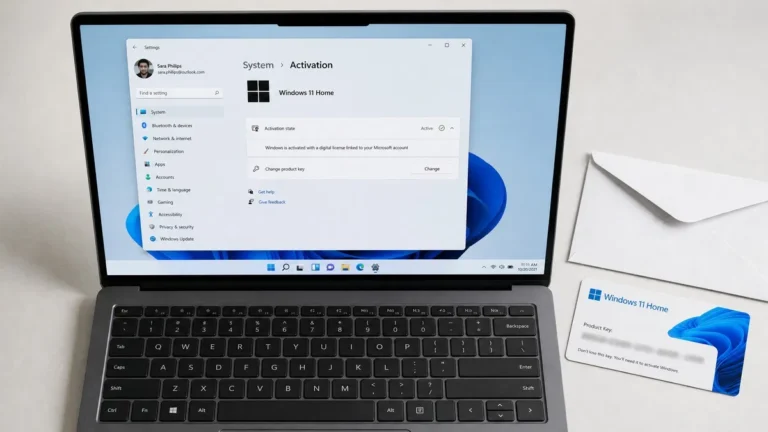
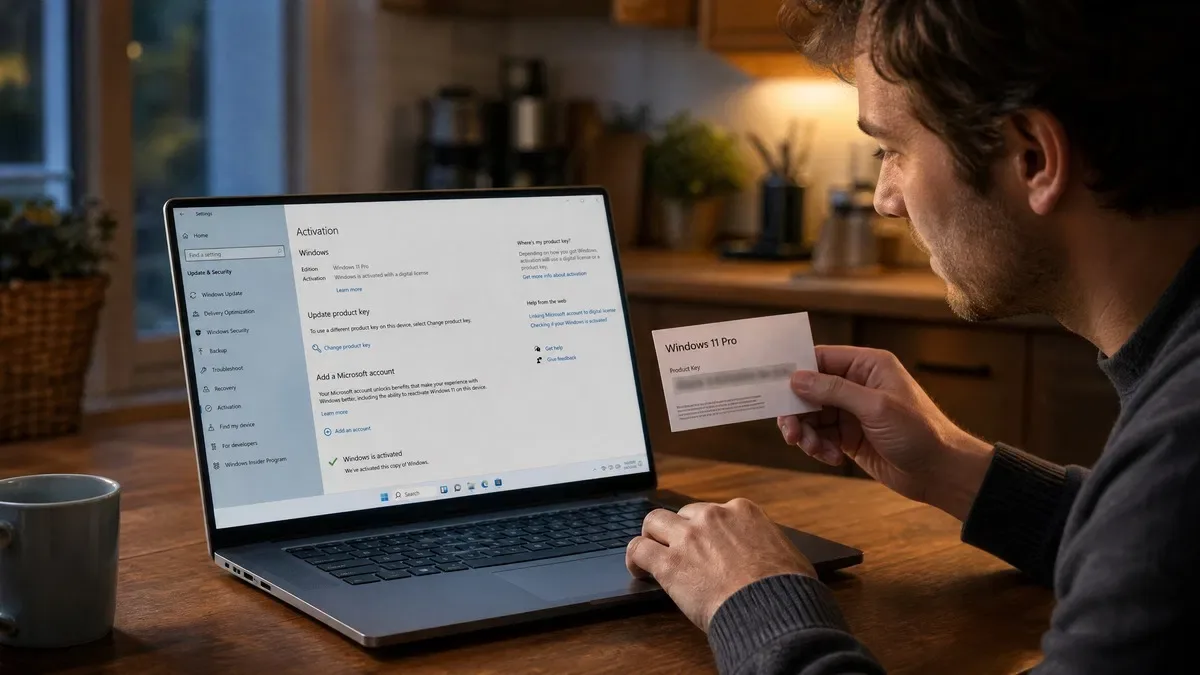
- When the key arrives, activate it through Settings > System > Activation > Change product key. Windows reports success or a specific error code within seconds.
- Run
slmgr /dliin an admin Command Prompt and confirm the channel matches what you bought. Sign in with a Microsoft account so the digital license is linked to it, and keep the invoice and key in a password manager.
Microsoft’s Activate Windows page lists what each activation error means if step five does not go smoothly.
Cheap Windows 10 keys: still worth buying?
Windows 10 reached end of support on October 14, 2025. It still installs and activates, and a genuine Windows 10 Pro key is a reasonable choice for a PC that cannot meet Windows 11’s TPM 2.0 and Secure Boot requirements, or that runs software certified only for Windows 10. A Windows 10 key of a given edition also activates Windows 11 of the same edition, so it is not a dead end. We cover the options in where to get a Windows 10 product key. For hardware that qualifies, a Windows 11 key is the cleaner buy at a similar price.
Our take: Buy from a seller you can verify, not the cheapest one on the page. Check the legal entity, the stated license type and the guarantee, insist on activating through Windows itself, and confirm the channel with slmgr /dli afterwards. Our Windows 11 Pro key at $10.99 passes every one of those checks, and so do the other genuine keys in our operating systems range. If a seller fails even one, the few dollars saved are not worth a blocked key six months from now.
Frequently asked questions
Are the cheap Windows keys legit or will Microsoft ban them?
Some are legitimate and some are not, and the price alone cannot tell you which. A key sold by a registered company, described with its license type, delivered with an invoice and covered by a guarantee is a normal software purchase. A key with no seller identity, no stated license type and a price far below anything else on the market is far more likely to be a leaked volume key or a fraudulently purchased one. Microsoft does not ban users; it blocks keys, which means Windows reverts to not activated and you buy again.
Is a 3rd party Windows 11 key different from one bought from Microsoft?
The software is identical. A genuine key from an independent reseller activates through the same Settings screen, receives the same updates, and produces the same digital license on Microsoft’s servers. The differences are commercial: who you contact for support and what guarantee covers the purchase. With Microsoft you get Microsoft’s support line. With a reseller you get the reseller’s support and refund policy, which is why the seller’s identity and guarantee terms matter more than the key itself.
What happens if a cheap key stops working after a few months?
Windows shows a not-activated watermark and a message under Settings, System, Activation, typically with error 0xC004C003 (the key has been blocked) or 0xC004C008 (used on too many devices). Personalization settings lock, but your files and programs keep working. Your remedy is the seller’s guarantee, which is why we recommend buying only from a seller with a written one. Our keys are covered for 180 days; if a key ever fails activation in that time we replace it or refund you.
What is the best place to buy a Windows 11 key?
The best place is whichever seller meets all of the checks in this article: a named legal entity with an address, a clear statement of whether the key is retail or OEM, an invoice, a stated guarantee, a reachable support channel, and activation through Windows itself rather than a downloaded tool. Microsoft’s own store meets every check at the highest price. Established independent resellers meet them at a much lower price. Unnamed marketplace sellers usually fail two or three of them.
A cheap Windows key you can actually verify
Genuine Windows 11 Pro from Makers Unity LLC, stated license type, email delivery, activation through Settings, and a 180-day replacement guarantee.